
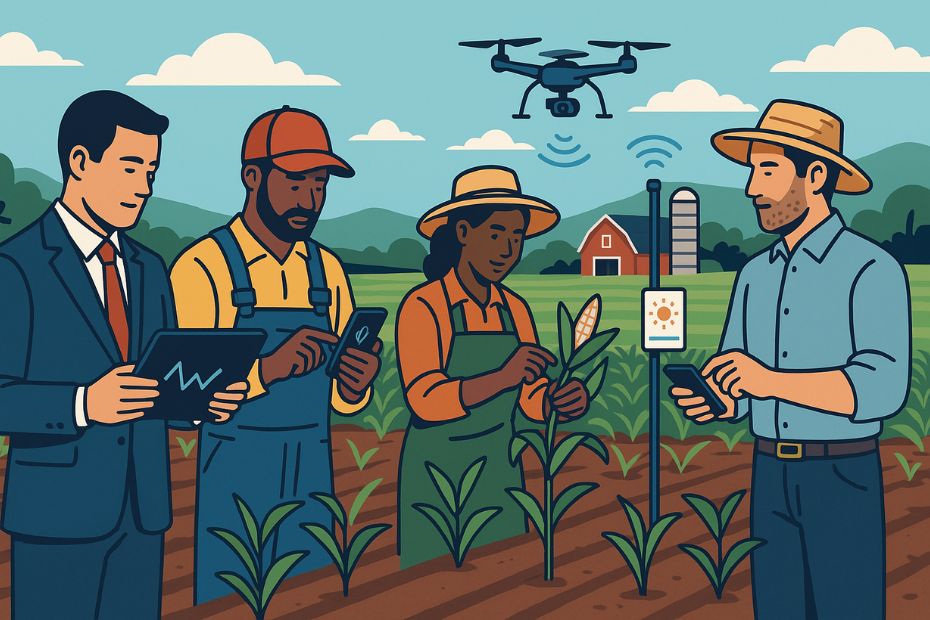
Agriculture has always been one of the riskiest sectors to invest in, but that’s exactly what makes smart risk management essential. Whether you’re funding row crops in the Midwest or exploring agri-tech ventures in sub-Saharan Africa, you face exposure to climate shocks, shifting policies, volatile markets, and biological uncertainties. What sets you apart is how you plan for them. Managing these risks isn’t about eliminating uncertainty—it’s about understanding where the exposures lie and having the right tools in place to keep your investment healthy. This article walks you through proven risk control strategies that help secure returns and stabilize performance in the ever-changing world of agricultural investing.
Know the Risk Categories Before You Make a Move
You can’t manage risk until you define it. In agriculture, risk doesn’t come from a single direction. You’re dealing with production risk (drought, floods, pests), market risk (price swings, input costs), institutional risk (subsidies, taxes, regulations), and financial risk (interest rates, access to credit). You also have to factor in operational and labor-related risks, especially in emerging markets.
For instance, crop failure isn’t just a weather problem—it can be tied to fertilizer access, pest outbreaks, or outdated irrigation. Price volatility can stem from geopolitics, trade restrictions, or unexpected consumer behavior. Understanding these relationships helps you prioritize which risks need mitigation and which ones simply need monitoring.
Diversification Isn’t Just a Strategy—It’s a Requirement
The oldest trick in the investment playbook works just as well in agriculture: spread your exposure. Instead of backing a single crop, region, or technology, diversify across multiple levers. That might mean mixing short-season and long-season crops or including livestock in your portfolio. If you’re investing in agri-tech, spread between startups focused on precision irrigation, soil monitoring, and alternative proteins.
A good example is the strategy used by many institutional farmland investors in North America. They allocate across almonds, corn, soybeans, and permanent crops in different climatic zones. When one area underperforms due to weather, another compensates with higher yields or stronger prices. If you’re building an agri-investment portfolio, this type of structural diversification helps smooth out returns across seasons.
Use Crop Insurance and Parametric Tools to Hedge Volatility
Insurance is one of the most effective tools at your disposal, and you should use it wisely. Traditional yield-based insurance protects against crop loss due to weather events or pests. In markets like the U.S., federal programs offer revenue protection and coverage indexed to actual production history. If you’re investing globally, private or NGO-backed insurers like Pula or Acre Africa offer similar services tailored to smallholders.
Beyond standard insurance, consider parametric tools. These policies pay out based on triggers like rainfall thresholds or temperature extremes—removing the need for damage assessments. Parametric coverage has gained popularity in regions where conventional loss assessment is difficult or slow. It’s particularly useful if you’re managing portfolios in sub-Saharan Africa or Southeast Asia, where climate volatility is high and infrastructure is limited.
Lock in Pricing With Futures and Forward Contracts
Price volatility is a constant in agriculture, but you can manage it through futures and forward contracting. If you’re investing in commodity crops—corn, wheat, soy, or coffee—you can hedge market risk by locking in prices ahead of harvest. Futures markets allow you to set price expectations and reduce uncertainty around revenue. For large-scale operations, this predictability can be the difference between profit and loss in a tight margin year.
In many developing markets, futures aren’t accessible, but forward contracts with local processors or exporters can offer similar benefits. The key is to establish fair, enforceable agreements that align incentives. You reduce speculative exposure while giving buyers a steady supply—and that stability makes your investment more attractive to downstream partners.
Pay Attention to Political and Regulatory Shifts
Agricultural investments are tightly linked to policy. Subsidies, trade tariffs, land tenure rules, and environmental regulations all shape your operating environment. If you’re putting capital into a country without a strong history of legal enforcement, you need contingency plans for policy disruption.
Use due diligence to assess regulatory risk before you commit. Understand who controls water rights, how land ownership is documented, and what mechanisms are in place to challenge unfair taxes or export bans. Monitor international trade patterns and subsidy shifts, especially in key markets like the EU and China. When governments change, agri-policy often changes with them—and you can’t afford to be caught flat-footed.
Use AgTech to Control What You Can
You can’t control the rain, but you can control how your farms respond to it. Technology is becoming your best line of defense against many production risks. Satellite imaging, soil moisture sensors, drone mapping, and AI-driven weather forecasting give you tools to act early. Precision agriculture allows for site-specific input application, improving efficiency while reducing costs.
Startups like CropX and Arable are offering scalable tech platforms that give investors real-time data on soil health, irrigation needs, and pest risks. If you’re investing in farmland, these tools not only boost yields but also improve transparency and reporting for stakeholders. Data turns uncertainty into calculated risk—and that changes your entire investment model.
Climate Risk Deserves Its Own Strategy
More frequent droughts, unpredictable rainfall, and extreme heat are now part of your risk calculation. Climate change isn’t theoretical—it’s operational. If your investment doesn’t take resilience seriously, it’s exposed. Choose drought-resistant crop varieties. Support regenerative practices that improve soil carbon and water retention. In flood-prone areas, look at raised bed systems or wetland farming.
Many investors are also using climate scenario modeling tools to evaluate long-term exposure. Tools like Acclimatise or ClimateAI can forecast how your holdings might perform under various warming scenarios. That knowledge helps you reallocate capital, insure wisely, and adapt your agronomic practices before the risks materialize.
Local Partnerships Make You Resilient
Even with all the tech and planning in the world, you’re still operating in complex, on-the-ground environments. That’s why partnerships with local cooperatives, agronomists, and NGOs are essential. They offer real-time information, cultural insight, and problem-solving capacity that you won’t get from dashboards or spreadsheets.
If you’re investing in smallholder networks, especially in frontier markets, building strong relationships ensures your interventions are accepted and maintained. Local partners help you identify early warning signs, adapt programs mid-season, and ensure your capital actually delivers on its goals.
How can you manage risk in agriculture investments?
- Diversify crops, locations, and partners
- Use crop and parametric insurance
- Lock prices through futures or forward contracts
- Leverage agtech for monitoring and forecasting
- Adapt to climate risks with resilient practices
In Conclusion
Agricultural investments will always carry a measure of risk—but with the right tools and approach, that risk becomes manageable. Your job isn’t to avoid uncertainty. It’s to anticipate it, price it, and prepare for it. When you diversify wisely, protect yourself with insurance and contracts, use data for decision-making, and build strong local partnerships, you reduce your downside while preserving your upside. Agriculture will never be a risk-free sector, but it will always be one of the most vital. Managing risk effectively ensures that your capital supports not just profit, but progress.

Dax Cooke is the founder of Farmfolio, a Medellín-based agribusiness and farmland development company. With 10+ years across capital markets and agribusiness, he builds sustainable, cash-flowing farmland projects and export supply chains (coconut, lime, teak, avocado). A three-time NAIFA 40 Under 40 honoree, his career began at Citigroup’s Capital Markets.